

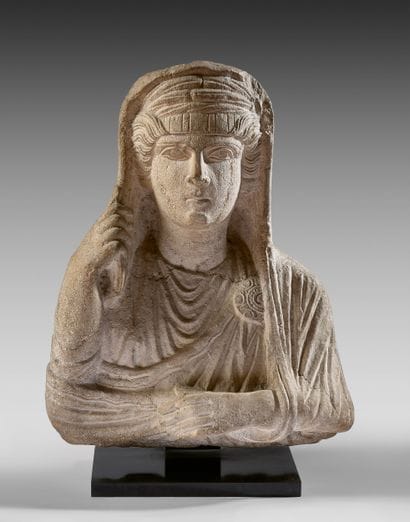
Informations sur la vente - Collections
Auction at Drouot Richelieu, Room 4, on Friday, December 11, at 2:00 p.m.
Public viewings:
Wednesday, December 9, from 11 a.m. to 6 p.m.,
Thursday, December 10, from 11 a.m. to 8 p.m.,
On the morning of the auction from 11:00 a.m. to 12:00 p.m.
Conditions de vente - Collections
Conditions générales de vente
L’adjudicataire est obligé au paiement comptant du prix d’adjudication, majoré des frais et taxes afférentes à la vente, soit de manière cumulative :
- Frais de vente de 30,00% T.T.C.
- Des frais d’utilisation de plateforme tierces applicables sur le prix d’adjudication :
Drouot.com (Drouot Live) : 1,5 % (soit 1,8% T.T.C.)
- Des éventuels frais de stockage en cas de non-retrait du lot.
A l’issue de la vente, les lots sont entreposés au Magasinage de l’Hôtel Drouot, sauf indication contraire et expresse de la société FERRI.
La société FERRI n’effectue aucun emballage ni envoi.
La société à responsabilité limitée FERRI est un opérateur de ventes volontaires de meubles aux enchères publiques régi par les articles L321-4 et suivants du Code de commerce inscrite au RCS de Paris sous le numéro Siren 442 577 573 et dont le siège social est sis 53 rue Vivienne – 75002 Paris. En cette qualité FERRI agit comme mandataire du vendeur qui contracte avec l’adjudicataire par son intermédiaire. Les rapports entre FERRI et l’enchérisseur sont soumis aux présentes conditions générales d’achat (ci-après, les « CGA »). Les los sont vendus par un vendeur à l’adjudicataire, FERRI n’étant pas partie au contrat de vente.
ACCEPTATION, OPPOSABILITE ET MODIFICATION DES CGA
Les CGA sont applicables sans restriction ni réserve à la relation entre FERRI et tout enchérisseur. Les CGA sont communiquées préalablement à la vente sur le site Internet de FERRI, ainsi qu’au sein du catalogue de la vente concernée. L’enchérisseur déclare avoir pris connaissance des CGA et les accepte sans réserve en portant une enchère, quel qu’en soit le moyen. Les CGA applicables à la relation entre les parties sont celles en vigueur au moment de la vente concernée en tenant compte des éventuelles modifications écrites ou orales émises avant et pendant la vente et qui sont reportées au sein du procès-verbal de vente.
AVANT LA VENTE
- Indications relatives aux lots
Les notices d’information contenues dans le catalogue sont établies, en l’état des connaissances au jour de la vente et avec toutes les diligences requises, par FERRI et l’expert qui l’assiste le cas échéant, sous réserve des notifications, déclarations, rectifications, annoncées verbalement au moment de la présentation du lot et portées au procès-verbal de vente. Les biens d’occasion ne bénéficient pas de la garantie légale de conformité visée à l’article L.217-2 du Code de la consommation.
- Etat des lots et constats d’état ou de conservation
Les lots sont vendus dans l’état dans lequel ils se trouvent au moment de la vente et il relève ainsi de la responsabilité des futurs enchérisseurs d’examiner chaque lot avant la vente et notamment lors des expositions. L’absence de mention dans le catalogue n’implique aucunement que le lot soit en parfait état de conservation ou exempt de dommages, accidents, incidents ou restaurations. Seule l’existence de réparations, ainsi que de restaurations, manques et ajouts significatifs dont le lot peut avoir fait l’objet, a vocation à être indiquée. Les dimensions et poids des lots sont donnés à titre indicatif. De même, la mention de défectuosités n'implique pas l’absence d’autres défauts. Des constats d’état ou de conservation des objets peuvent être établis gracieusement sur demande et par commodité, FERRI ou ses experts n’étant pas des restaurateurs, ces rapports de condition ne sauraient remplacer la consultation de professionnels.
- Œuvres d’art et objets de collection
FERRI rappelle que l’emploi du terme « attribué à » suivi d’un nom d’artiste garantit que l’œuvre ou l’objet a été exécuté pendant la période de production de l’artiste mentionné et que des présomptions sérieuses désignent celui-ci comme l’auteur vraisemblable. « Entourage de » signifie que l’œuvre ou l’objet est le travail d’un artiste contemporain de l’artiste mentionné, qui s’est montré très influencé par l’œuvre du maître. L’emploi des termes « atelier de » suivis d’un nom d’artiste garantit que l’œuvre a été exécutée dans l’atelier du maître cité mais réalisée par des élèves sous sa direction. Les expressions « dans le goût de », « style de », « manière de », « genre de », « d’après », « façon de » ne confèrent aucune garantie particulière d’identité d’artiste, de date de l’œuvre ou d’école.
- Provenance
FERRI rappelle que les mentions concernant la provenance d’un lot sont fournies sur indication du vendeur et ne sauraient entraîner la responsabilité de FERRI. Si le vendeur a requis la confidentialité ou si l’identité des précédents propriétaires est inconnue du fait de l’ancienneté du lot, aucune indication relative à la provenance n’est portée au sein de la présentation du lot au catalogue.
- Modifications des informations
Les informations figurant au catalogue peuvent faire l’objet de modifications ou de rectifications jusqu’au moment de la vente. Ces changements sont portés à la connaissance du public par une annonce faite par le commissaire-priseur habilité au moment de la vente ou par un affichage approprié en salle. Ces modifications sont consignées au procès-verbal de vente.
- Illustration des lots
Les photographies des lots mis en vente figurant au catalogue et sur le site Internet de FERRI, ainsi que sur les plateformes des opérateurs intermédiaires de FERRI n’ont pas de valeur contractuelle supérieure à la description opérée dans le catalogue. Les photographies sont données à titre indicatif impliquant que les couleurs des œuvres ou objets reproduit dans le catalogue sont susceptibles de différer des couleurs réelles ou de comporter des différences résultantes, de manière non exhaustive, de l’adaptation technique, de la qualité photographique ou encore du support de reproduction.
- Montres et articles d’horlogerie
Les articles d’horlogerie et les montres peuvent comporter des pièces qui ne sont pas d’origine. Les restaurations, caractéristiques techniques, numéros de série, dimensions et poids sont donnés à titre indicatif. FERRI n’apporte aucune garantie que la montre ou l’article d’horlogerie est en état de fonctionnement. Il appartient à tout enchérisseur de procéder lui-même à l’analyse du fonctionnement et/ou d’une éventuelle restauration et/ou de l’étanchéité de tels objets. Les frais relatifs aux restaurations, révisions, aux réglages et à l’étanchéité sont à la charge exclusive de l’adjudicataire.
- Pierres et bijoux
FERRI ou l’expert applique les appellations selon les normes et règlementations techniques conformes au décret n° 2002-65 du 14 janvier 2002.
- a) FERRI ou l’expert désigne les pierres modifiées par « les pratiques lapidaires traditionnelles » de la même manière que celles qui n’auraient pas été modifiées (Art. 3.)
- b) FERRI ou l’expert désigne les pierres modifiées par d’autres procédés, par le nom de la pierre, suivi de la mention « traitée » ou par l’indication du traitement subi (Art. 2.).
Les pierres non accompagnées de certificats ou attestations de laboratoires sont estimées par FERRI ou l’expert en tenant compte des modifications éventuelles du paragraphe (a).
FERRI ou l’expert se tient à la disposition des acheteurs pour tous renseignements complémentaires concernant le décret n° 2002-65 ou les différentes sortes de traitement existantes.
Les techniques d’identification et les conclusions d’analyse concernant l’origine et la classification des pierres et perles peuvent varier d’un laboratoire à un autre. En conséquence, il est possible d’obtenir, dans certains cas, un résultat différent en fonction des laboratoires consultés. FERRI et l’expert ne pourront en aucun cas être tenus responsables de ces différences.
L’examen de trace de traitement « HPHT » est effectué par FERRI ou l’expert par méthode de transmission optique.
Les pierres présentées sans certificat de laboratoire sont vendues sans garantie aucune d’un éventuel traitement.
- Estimations des lots
FERRI rappelle que les estimations sont fondées sur l’état, la rareté, la qualité et la provenance des lots et sur les prix récemment atteints aux enchères pour les biens similaires. Les estimations peuvent changer. Les estimations sont ainsi fournies à titre purement indicatif et elles ne peuvent être considérées comme impliquant la certitude que le lot soit vendu au prix estimé ou à l’intérieur de la fourchette d’estimations. Les estimations ne sauraient ainsi constituer une quelconque garantie. Les estimations ne comprennent ni les frais de vente ni aucune taxe ou frais applicables.
- Retrait de lot
FERRI peut librement retirer un lot à tout moment avant la vente ou pendant la vente aux enchères. Cette décision de retrait n’engage en aucun cas la responsabilité de FERRI à l’égard de tout enchérisseur.
- Exposition publique préalable à la vente et catalogue.
FERRI est libre d’organiser des expositions publiques préalablement à la vente et dont les modalités sont précisées sur le catalogue ou sur tout support de la vente concernée. Tout enchérisseur est invité à examiner les lots préalablement à la vente. Les lots sont exposés afin de respecter leur sécurité. Toute manipulation effectuée par un visiteur se fait à ses risques et périls.
LA VENTE
- Enregistrement et accès à la vente
En vue d’une bonne organisation de la vente et préalablement à celle-ci, les enchérisseurs sont invités à se faire connaitre auprès de FERRI, en lui communiquant un justificatif d’identité, ainsi que des références bancaires. FERRI se réserve le droit de solliciter un dépôt de garantie, dont le montant est restitué après la vente si le lot n’a pas été adjugé à l’enchérisseur selon une temporalité propre à la plateforme initialement utilisée par l’enchérisseur pour effectuer le dépôt de garantie. FERRI se réserve le droit d’interdire l’accès à la vente à tout enchérisseur pour justes motifs.
L’enchérisseur est réputé s’inscrire et enchérir pour son propre compte. S’il enchérit pour autrui, l’enchérisseur doit indiquer à FERRI avant la vente qu’il est dûment mandaté par un tiers pour lequel il communiquera une pièce d’identité et des références bancaires. Toute fausse indication engage la responsabilité de l’enchérisseur. Si l’enchérisseur agit en tant qu’agent pour un mandant occulte, il accepte expressément d’être tenu personnellement responsable de payer le prix d’achat et toutes autres sommes dues.
FERRI étant soumise aux obligations en matière de lutte contre le blanchiment de capitaux et financement du terrorisme, elle se réserve le droit de demander à tout enchérisseur de justifier de son identité au moyen d’un document probant et ce, conformément aux dispositions du Code monétaire et financier. A défaut de communiquer de tels documents ou si la vérification de ces documents s’avère impossible, l’enchérisseur ne peut s’inscrire à la vente.
- Modalités des enchères
- Enchères en salle
FERRI rappelle que le mode usuel pour enchérir consiste à être présent en salle pendant la vente, à moins que le vente ne soit réalisée de manière totalement dématérialisée (vente online). FERRI ne peut engager sa responsabilité pour tout autre mode de passation des enchères notamment si une erreur qu’elle soit d’ordre technique ou non, une omission ou une difficulté de liaison ou de connexion existait.
- Ordres d’achat ferme et enchères téléphoniques
FERRI se propose d’exécuter gracieusement des ordres d’achat ferme et des enchères téléphoniques, selon les instructions de l’enchérisseur. L’enchérisseur adresse sa demande à FERRI en renseignant le formulaire prévu à cet effet en fin de catalogue accompagné d’un document d’identification (carte d’identité recto-verso pour les personnes physiques, extrait Kbis pour les personnes morales) et de coordonnées postales, électroniques et téléphoniques et ce, au plus tard deux (2) heures avant la vente. Toute demande d’ordre d’achat ferme ou d’enchère téléphoniques doit avoir reçu une confirmation de FERRI pour être exécutée. FERRI se réserve le droit de ne pas accepter un ordre d’achat notamment, et de manière non limitative, si l’enchérisseur ne propose pas de garanties suffisantes.
Dans certains cas, la prise en compte d’un ordre d’achat ou d’une enchère téléphonique peut-être conditionnée à un dépôt de garantie.
Les offres illimitées ou d’ « achat à tout prix » ne sont pas acceptées, l’enchérisseur est tenu de donner un montant maximal. Dans le cas de plusieurs ordres d’achat identiques, la priorité est donnée à celui reçu en premier. FERRI décline toute responsabilité en cas d’erreurs éventuelles, d’insuccès si la liaison téléphonique ne peut-être établie ou de non-réponse suite à une tentative d’appel. FERRI peut enregistrer les communications et peut les conserver jusqu’au règlement des éventuelles acquisitions.
- Enchères en ligne par des plateformes tierces
FERRI peut proposer d’enchérir en ligne par le biais de tout site Internet de plateformes d’opérateurs intermédiaires relayant la vente. Ces sites Internet constituent des plateformes techniques permettant de participer à distance par voie électronique aux ventes aux enchères publiques ayant lieu dans des salles de ventes. L’utilisateur souhaitant participer à une vente aux enchères en ligne, via ces sites internet, doit prendre connaissance et accepter, sans réserve, les conditions d’utilisation de ces plateformes, qui sont indépendantes et s’ajoutent aux présentes conditions générales d’achat, impliquant notamment des frais additionnels liés à leur utilisation.
- Vente online
FERRI organise des ventes online par le biais de plateformes d’opérateurs intermédiaires. L’utilisateur souhaitant participer à une vente aux enchères en ligne, via ces sites Internet, doit prendre connaissance et accepter, sans réserve, les conditions d’utilisation de ces plateformes, qui sont indépendantes et s’ajoutent aux présentes conditions générales d’achat, et notamment vérifier l’application de tout frais éventuel pour l’utilisation de ces sites Internet tiers.
DEROULEMENT DE LA VENTE
- Pouvoir discrétionnaire du commissaire-priseur habilité et conduite de la vente
Le commissaire-priseur habilité organise et dirige les enchères de façon discrétionnaire, la conduite de la vente suit l’ordre de la numérotation du catalogue et les paliers d’enchères sont à sa libre appréciation. Le commissaire-priseur habilité veille au respect de la liberté des enchères et à l’égalité entre les enchérisseurs. Il dispose de la faculté discrétionnaire de refuser toute enchère, de retirer un lot de la vente et de désigner l’adjudicataire, c’est-à-dire le plus offrant et le dernier enchérisseur, une fois le terme « adjugé » prononcé. Les enchères en salle priment sur toute autre enchère.
Le commissaire-priseur dispose de la faculté discrétionnaire de déplacer, de réunir ou de séparer des lots ou de retirer des lots de la vente. En aucun cas la responsabilité de FERRI ne peut être engagée en cas de retrait de tout lot au cours de la vente, et notamment vis-à-vis des enchérisseurs ayant effectué une demande d’ordre d’achat ferme ou d’enchère téléphonique.
En cas de contestation au moment de l’adjudication, c’est-à-dire s’il est établi que deux ou plusieurs enchérisseurs ont simultanément porté une enchère équivalente, soit à haute voix, soit par signe, et réclament en même temps cet objet après le prononcé du mot « adjugé », ledit objet est immédiatement remis en vente au dernier prix proposé par les enchérisseurs et tout le public présent est admis à enchérir à nouveau.
- Conduite de la vente
La vente se fait expressément au comptant et est conduite en euros. FERRI peut toutefois offrir, à titre indicatif, la retranscription des enchères en devises étrangères. En cas d’erreur de conversion de devises, la responsabilité de FERRI ne peut être engagée, seul le prix en euros faisant foi.
L’accès aux lots lors de la vente est strictement interdit.
- Préemption
Les articles L.123-1 et L.123-2 du Code du patrimoine autorisent, dans certains cas, les Musées Nationaux ou la BNF, à exercer un droit de préemption, c’est-à-dire la faculté pour les Musées Nationaux ou la BNF de se substituer à l’adjudicataire, sur les œuvres d’art mises en vente publique ou à l’occasion de vente de gré à gré après une vente aux enchères publiques préalable infructueuse. Le représentant de l’Etat présent lors de la vacation formule sa déclaration auprès du commissaire-priseur habilité juste après la chute du marteau. La décision de préemption doit ensuite être confirmée dans un délai de quinze (15) jours. Par ailleurs, et conformément à l’article R. 123-7 du Code de commerce, le droit de préemption peut être exercé par voie électronique. En pareille situation, la décision de préemption doit être confirmée dans un délai de quatre (4) heures à compter de la réception du résultat par le représentant de l’Etat. En aucun cas, FERRI ne peut assumer une quelconque responsabilité du fait des décisions administratives de préemption.
- Vente aftersale
Le ou les lots non adjugés à l’issue de la vente aux enchères publiques peuvent faire l’objet d’une vente de gré à gré à la discrétion de FERRI, dite vente aftersale, pour laquelle les présentes CGA trouvent pleinement à s’appliquer, donnant lieu à l’établissement d’un bordereau d’adjudication comportant les frais nécessairement dus au titre de la vente du ou des lots.
EXECUTION DE LA VENTE
Dans l’hypothèse où l’adjudicataire ne se serait pas fait enregistrer avant la vente, il doit communiquer les renseignements nécessaires dès l’adjudication du lot prononcée.
- Obligation de paiement
L’adjudication opère un transfert de propriété et oblige l’adjudicataire au paiement intégral du prix d’adjudication, ainsi que de l’ensemble des frais et taxes précisés ci-après. Le paiement doit être effectué immédiatement après la vente selon les modalités précisées à l’article 3 de la présente section et ne peut en aucun cas être différé, quand bien même l’adjudicataire souhaite exporter le lot et est dans l’attente de l’obtention d’une licence d’exportation. Aucun lot n’est remis à l’adjudicataire avant l’acquittement de l’intégralité des sommes dues.
- Frais de vente
En sus du prix d’adjudication, c’est-à-dire du « prix marteau », l’adjudicataire doit acquitter les frais de :
- 28,80 % T.T.C. pour les ventes sans catalogue imprimé.
- 30,00 % T.T.C. pour les ventes avec un catalogue imprimé.
En sus des frais susvisés, les paiements effectués avec des cartes de crédit émises hors Union européenne sont soumis à une commission de 1,5 % T.T.C. sur le montant total à régler T.T.C.
- TVA
Sauf indication contraire, les lots sont vendus sous le régime fiscal de la marge prévu à l’article 297A du Code général des impôts. La TVA est au taux de 20 % (5,5% pour les livres). Elle n’est pas récupérable. Les acheteurs hors UE ou les professionnels UE justifiant d’un numéro de TVA intracommunautaire et d’une sortie de territoire peuvent être remboursés de la TVA sur les honoraires acheteurs.
Les lots précédés du symbole « * » sont soumis au régime général de TVA en vigueur depuis le 1er janvier 2025. Ils sont soumis à une TVA au taux de 5,5% sur la totalité du prix d’adjudication et des frais de ventes.
- Paiement
L’adjudicataire peut effectuer son règlement par les moyens suivants :
- En espèces : jusqu’à 1.000 euros frais et taxes compris pour les particuliers français et pour les commerçants français ou étrangers, jusqu’à 15.000 euros frais et taxe compris pour les ressortissants étrangers non commerçants sur présentation de leur pièce d’identité avec une adresse à l’étranger, étant précisé que ces seuils s’apprécient dans le cadre de la totalité des adjudications au sein d’une même vacation pour un même adjudicataire ;
- par carte bancaire Visa ou Mastercard – les règlements par carte bancaire American Express ne sont pas acceptés ;
- par virement bancaire, les éventuels frais additionnels de transfert étant à la seule charge de l’adjudicataire sur le compte suivant : Banque HSBC – IBAN : FR76 3005 6009 1709 1700 1036 408 – SWIFT : CCFRFRPP.
- par paiement bancaire sur le site de FERRI à l’adresse URL suivante : https://https://ferri-drouot.com/paiement-en-ligne
- par chèque, la délivrance du lot étant conditionnée à l’encaissement effectif des sommes par FERRI.
En tout état de cause, la délivrance des lots est subordonnée à l’encaissement de l’intégralité des sommes dues par l’adjudicataire, de telle sorte que la délivrance peut être différée au complet encaissement desdites sommes.
Le paiement doit être réalisé au seul nom de l’adjudicataire. FERRI rappelle qu’aucun paiement ne peut être réalisé pour un tiers et qu’aucune modification de l’identité de l’adjudicataire ne peut intervenir postérieurement à la vente aux enchères publiques. Aucun fractionnement de paiement n’est accepté.
- Retard de paiement
En l’absence de complet paiement des sommes dues dans un délai de trente (30) jours suivant la transmission du bordereau à l’adjudicataire, FERRI adresse à celui-ci une correspondance électronique lui impartissant de procéder au complet paiement dans un délai de quinze (15) jours suivant l’envoi de celle-ci. A défaut de s’y conformer, les sommes dues par l’adjudicataire sont productives d’un intérêt correspondant à trois fois le taux d’intérêt légal. En sus des intérêts de retard, après un délai de quinze (15) jours à la suite de l’envoi d’une mise en demeure, l’adjudicataire est redevable d’une indemnité forfaitaire de cinquante (50) euros au titre des frais de recouvrement.
Par ailleurs, l’adjudicataire est redevable de l’ensemble des frais et accessoires relatifs à la mise en œuvre du recouvrement des sommes dues.
- Défaut de paiement
Conformément à l’article L.321-14 du Code du commerce, à défaut de paiement par l’adjudicataire, et après mise en demeure restée infructueuse adressée à l’adjudicataire par lettre recommandée avec accusé de réception, le bien est remis en vente à la demande du vendeur sur réitération des enchères. Si le vendeur ne formule pas cette demande dans un délai de trois (3) mois à compter de l’adjudication, FERRI a mandat d’agir en son nom et pour son compte et peut, selon son choix :
- Notifier à l’adjudicataire défaillant la résolution de plein droit de la vente, sans préjudice des éventuels dommages-intérêts. L’adjudicataire défaillant demeure redevable des frais de vente ;
- Poursuivre l’exécution forcée de la vente et le paiement du prix d’adjudication et des frais de vente, pour son propre compte et/ou pour le compte du vendeur, ainsi que l’ensemble des frais engagés afin de parvenir au recouvrement des sommes dues par l’adjudicataire défaillant.
En tout état de cause, l’adjudicataire défaillant ne peut invoquer la résolution du contrat pour se soustraire aux obligations qui sont les siennes.
FERRI se réserve le droit d’exclure des ventes futures tout adjudicataire ou représentant de tout adjudicataire qui a été défaillant ou qui n’a pas respecté les présentes conditions générales d’achat. FERRI se réserve le droit d’inscrire l’adjudicataire défaillant ou son représentant à la liste noire des mauvais payeurs de DROUOT SI, lui interdisant ainsi d’utiliser les services de la plateforme Drouot.com. Par ailleurs, FERRI est adhérente au Service TEMIS permettant la consultation et l’alimentation du fichier des restrictions d’accès aux ventes aux enchères. FERRI se réserve également le droit de procéder à toute compensation de la créance due avec des sommes éventuellement dues à l’adjudicataire défaillant.
- Délivrance des lots
5.1 Tout lot ne peut être délivré à l’adjudicataire qu’après paiement intégral du prix, des frais et taxes. Sous réserve de la présentation de l’autorisation de délivrance du service comptable de FERRI attestant du complet paiement du bordereau. Les lots peuvent être délivrés au cours ou à l’issue immédiate de la vacation en salle de vente aux enchères. Les lots doivent être retirés dans les plus bref délais après leur règlement intégral. Les frais de gardiennage sont, en ce cas, à la charge de l’adjudicataire.
5.2 Les lots non retirés à l’issue de la vacation considérée sont entreposés au Magasinage de l’Hôtel Drouot sauf indication expresse contraire de FERRI.
Pour tout lot adjugé, réglé ou non, demeurant stocké au Magasinage de l’Hôtel Drouot, l’adjudicataire fait son affaire des frais liés au stockage et aux éventuelles pénalités de retard s’inférant des conditions particulières qui lui est applicable et ne peut en tenir rigueur à FERRI.
- Transport des lots – transfert de propriété et des risques
Le transfert de propriété ainsi que le transfert des risques s’opèrent au prononcé du terme « adjugé » par le commissaire-priseur habilité, de telle sorte que l’adjudicataire est lui-même chargé de faire assurer ses acquisitions. FERRI décline toute responsabilité quant aux dommages que le lot pourrait encourir, et ici dès l’adjudication prononcée. FERRI ne peut assumer une quelconque responsabilité en l’absence de prise de disposition à cet effet.
FERRI n’effectue aucun emballage ni envoi. Toutes les formalités et transports restent à la charge exclusive de l’adjudicataire, qu’elle que soit sa qualité, celui-ci devant se rapprocher de toute société de transport de son choix. Les sociétés de transport n’étant pas préposées de FERRI, cette dernière ne peut être responsable de leurs actes ou omissions. L’adjudicataire ayant opté pour un envoi de ses achats par une société de transport adhère aux conditions générales de ce prestataire et écarte la possibilité d’engager la responsabilité de FERRI en cas de préjudice subi dans le cadre de cette prestation de service.
CITES ET EXPORTATION DES BIENS CULTURELS
- Biens culturels
L’exportation hors de France ou l’importation dans un autre pays d’un lot peuvent être affectées par les lois du pays vers lequel le lot est exporté ou importé. L’exportation de tout lot hors de France ou l’importation dans un autre pays peuvent être soumises à l’obtention d’une ou plusieurs autorisation(s) d’exporter ou d’importer. Certaines lois peuvent interdire l’importation ou interdire la revente d’un lot dans le pays dans lequel il a été importé. L’exportation d’un lot revêtant la qualité de bien culturel, en dehors du territoire douanier français est subordonnée à l’obtention d’un certificat délivré par les services compétents du ministère de la Culture, dans un délai maximum de quatre (4) mois à compter de la demande, sous réserve des exceptions figurant au sein du Code du patrimoine. Les services du ministère de la Culture peuvent refuser la délivrance d’un tel certificat et rejeter une telle demande lorsque le bien culturel est notamment susceptible de présenter le caractère d’un trésor national. En tout état de cause, la responsabilité de FERRI ne saurait être engagée en cas de refus ou de retard de délivrance de certificat. La demande, la suspension ou le refus d’octroi de certificat est sans incidence aucune sur l’obligation de paiement à la charge de l’adjudicataire, lequel est redevable de ces sommes envers FERRI et notamment au titre des frais engagés. Sous certaines conditions laissées à la discrétion de FERRI, FERRI peut effectuer les formalités de demande de certificat d’exportation pour le compte de l’adjudicataire et est susceptible de facturer l’ensemble des frais afférents à l’adjudicataire. En cas de suspension, de rejet de la demande ou de refus de délivrance du certificat, FERRI n’est pas redevable du remboursement de telles sommes à l’adjudicataire.
- Règlementation Cites
La règlementation internationale du 3 mars 1973, dite Convention de Washington a pour objet la protection de spécimens et d’espèces dits menacés d’extinction. L’exportation ou l’importation de tout lot fait ou comportant une partie (quel qu’en soit le pourcentage) en ivoire, écailles de tortues, peau de crocodile, corne de rhinocéros, os de baleine, certaines espèces de corail et en palissandre, etc. peut être restreinte ou interdite. Il appartient, sous sa seule responsabilité, à l’adjudicataire de prendre conseil et de vérifier la possibilité de se conformer aux dispositions légales ou règlementaires qui peuvent s’appliquer à l’exportation ou l’importation d’un lot, avant même d’enchérir. Des informations supplémentaires relatives à la règlementation applicable à certains lots peuvent être indiquées sur la fiche de présentation du lot.
Dans certains cas, le lot concerné ne peut être transporté qu’assorti d’une confirmation par expert, aux frais de l’adjudicataire, de l’espèce et ou de l’âge du spécimen concerné. FERRI peut, sur demande, assister l’adjudicataire dans l’obtention des autorisations et rapport d’expert requis. Ces démarches sont conduites aux seuls frais de l’adjudicataire. Cependant, FERRI ne peut garantir que les autorisations soient délivrées. En cas de refus de permis ou de délai d’obtention de celui-ci, l’adjudicataire reste redevable de la totalité du prix d’achat du lot. Un tel refus ou délai ne saurait en aucun cas justifier le retard du paiement ou l’annulation de la vente.
PROPRIETE INTELLECTUELLE
FERRI est seule titulaire du droit de reproduction sur son catalogue et son contenu. Toute reproduction de celui-ci est interdite et constitue une contrefaçon à son préjudice. Toute reproduction du catalogue FERRI peut également constituer une reproduction illicite d’œuvre exposant son auteur à des poursuites en contrefaçon par le titulaire des droits d’auteur sur l’œuvre. La vente d’œuvre n’emporte pas au profit de son nouveau propriétaire le droit de reproduction et de représentation de l’œuvre.
DONNEES PERSONNELLES
L’enchérisseur est informé que FERRI en sa qualité de responsable de traitement collecte et traite des données personnelles dans le cadre de l’exécution d’un contrat avec l’enchérisseur, ayant pour l’objet la gestion des ordres d’achat ferme ou téléphonique, ainsi que la gestion des enchères et des adjudications. L’enchérisseur dispose d’un droit d’accès, de suppression, de rectification, de limitation et d’opposition de traitement et d’un droit à la portabilité sur ses données personnelles. L’enchérisseur est invité à consulter la politique de protection des données personnelles accessible depuis l’onglet « Confidentialité « en pied de page du site Internet FERRI. L’enchérisseur s’engage à fournir des renseignements à jour et est responsable de toute fausse déclaration.
LUTTE CONTRE LE BLANCHIMENT D’ARGENT ET LE FINANCEMENT DU TERRORISME
Conformément à l’article L.561-2, 14° du Code monétaire et financier, les obligations relatives à la lutte contre le blanchiment de capitaux et le financement du terrorisme sont applicables à FERRI en sa qualité d’opérateur de ventes volontaires lorsque celle-ci procède à une transaction ou une série de transactions liées d’un montant égal ou supérieur à 10.000 euros. L’adjudicataire ou son mandant s’engage à fournir spontanément et de bonne foi l’ensemble des documents permettant l’établissement de leur identité. En fonction des circonstances, FERRI peut être soumise à une obligation de vigilance renforcée, l’adjudicataire ou son mandant s’engageant alors à répondre à toute interrogation permettant à FERRI de se conformer à ses obligations légales.
LOI APPLICABLE ET ATTRIBUTION DE COMPETENCE JURIDICTIONNELLE
Conformément aux dispositions de L. 321-17 du Code de commerce, l’action en responsabilité à l’encontre d’un opérateur de ventes volontaires se prescrit par cinq ans à compter de la prisée ou de la vente aux enchères publiques. FERRI rappelle à ses clients l’existence du Recueil des obligations déontologiques des opérateurs de ventes volontaires pris par arrêté ministériel du 30 mars 2022. Ce recueil est disponible sur le site du Conseil des maisons de vente. FERRI informe également ses clients de la possibilité de recourir à une procédure extrajudiciaire de règlement des litiges en saisissant le commissaire du Gouvernement près le Conseil des maisons de vente, en ligne ou par courrier avec accusé réception. Seule la loi française régit les présentes conditions générales d’achat. Tous les litiges concernant sa validité, son interprétation, son exécution, sa réalisation, leurs conséquences et leurs suites sont soumis exclusivement aux tribunaux compétents de PARIS (France).